 Image 1 of 5
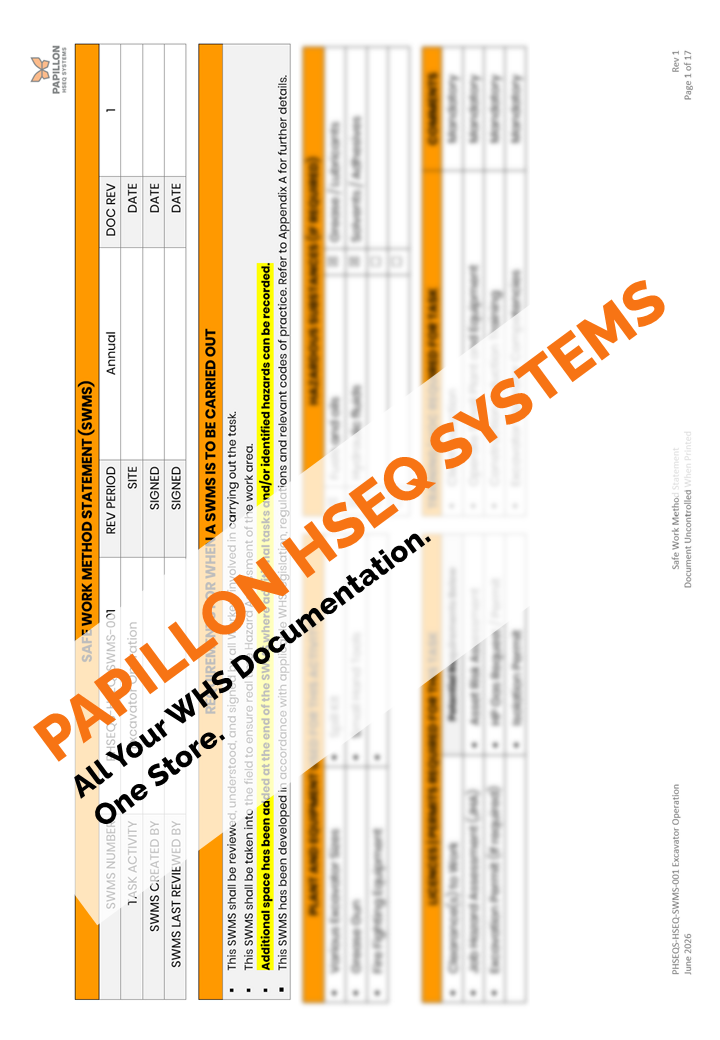 Image 2 of 5
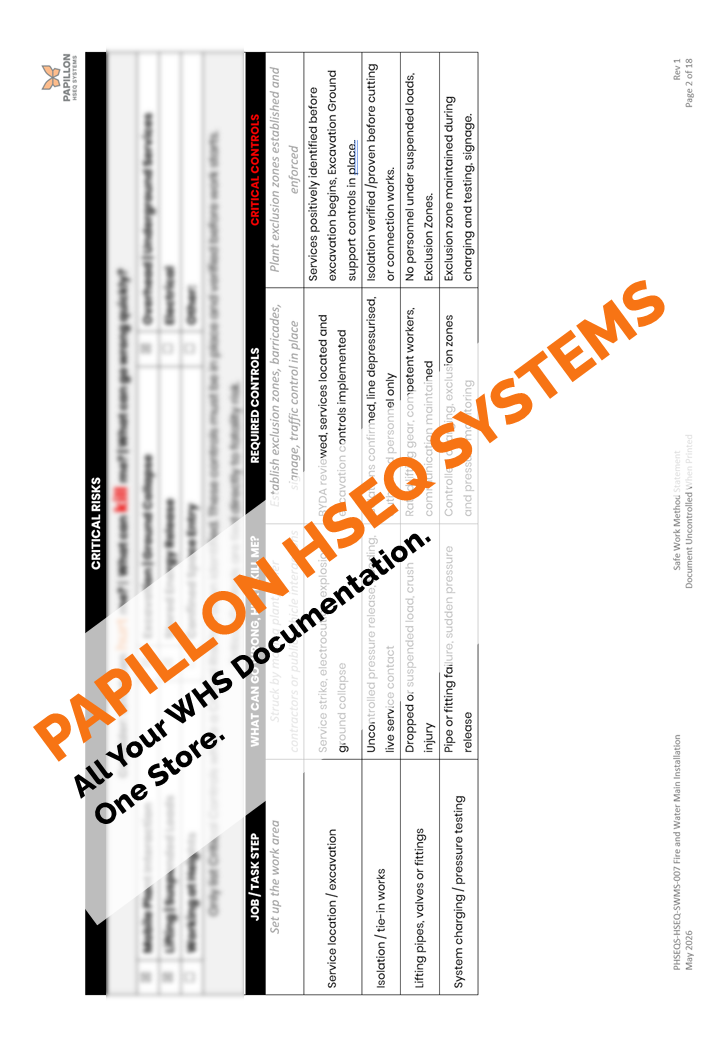 Image 3 of 5
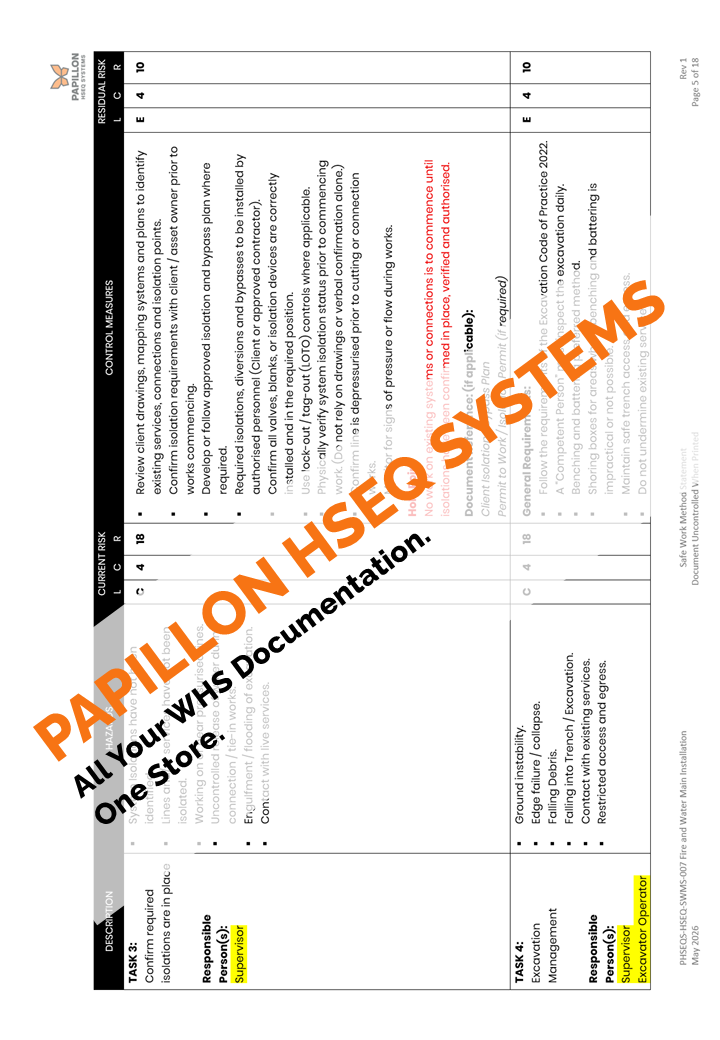 Image 4 of 5
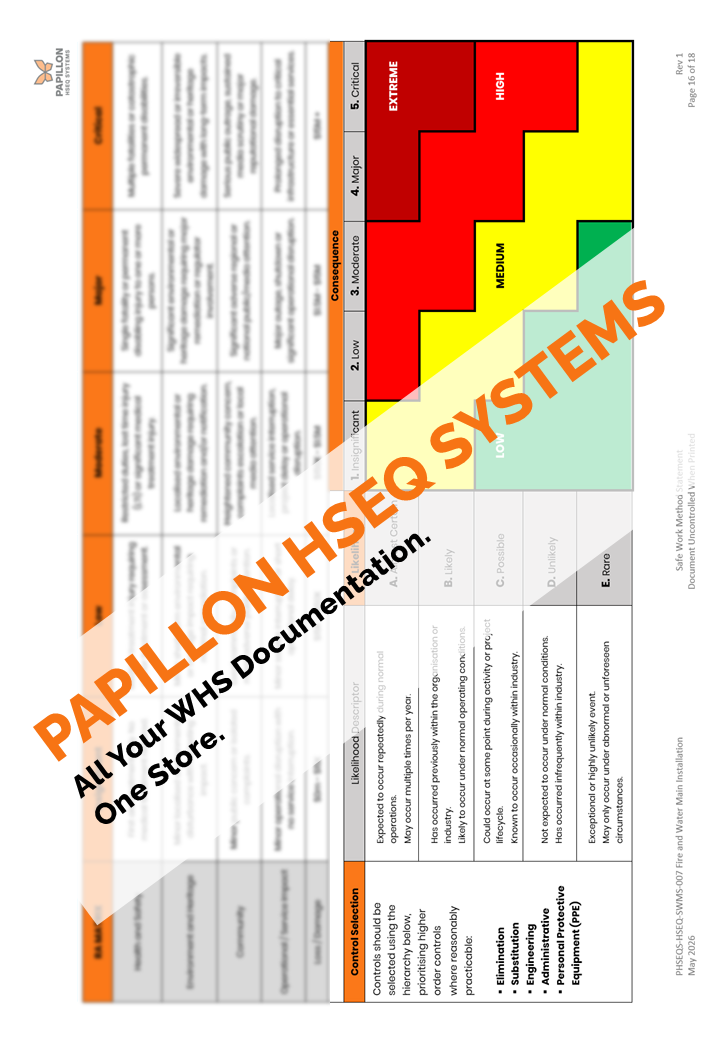 Image 5 of 5
A professional, editable Safe Work Method Statement (SWMS) developed for Excavator Operations across civil construction, utilities, infrastructure and earthworks projects.
This SWMS is designed to support high-risk construction activities involving excavation works, service location, trenching, lifting operations, spoil handling, truck loading, attachment changeovers and mobile plant operation. It provides practical, field-focused controls aligned with real-world construction and utility environments while addressing critical risks associated with plant interaction, excavation collapse, service strikes, suspended loads and equipment operation.
Professional SWMS format aligned to civil construction and excavation works
Covers excavator operation and excavation management activities
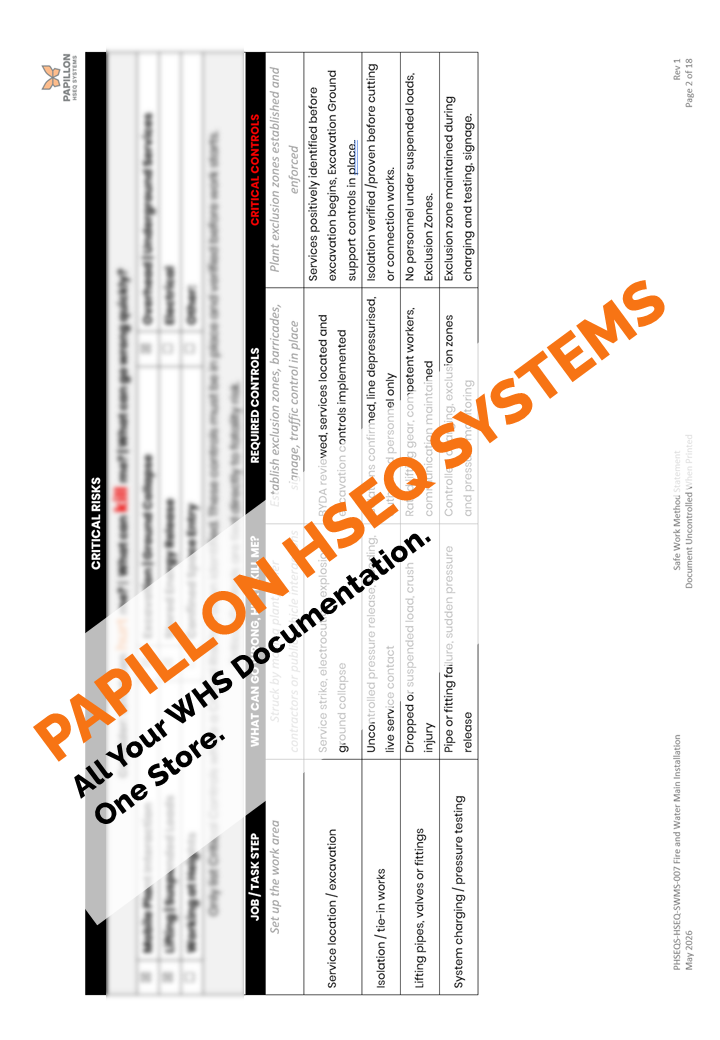
Includes Critical Risk identification and Critical Controls framework
Includes service location and underground asset protection controls
Covers excavation collapse and ground stability risks
Includes lifting operations using excavators
Covers spoil handling, truck loading and Chain of Responsibility considerations
Includes attachment changeout and quick hitch controls
Includes Hold Points and quality verification requirements
Includes change management and additional task reassessment sections
Practical field-focused controls suitable for operational crews
Professional Papillon HSEQ Systems design
Fully editable Microsoft Word format
Editable Excavator Operation SWMS (.docx)
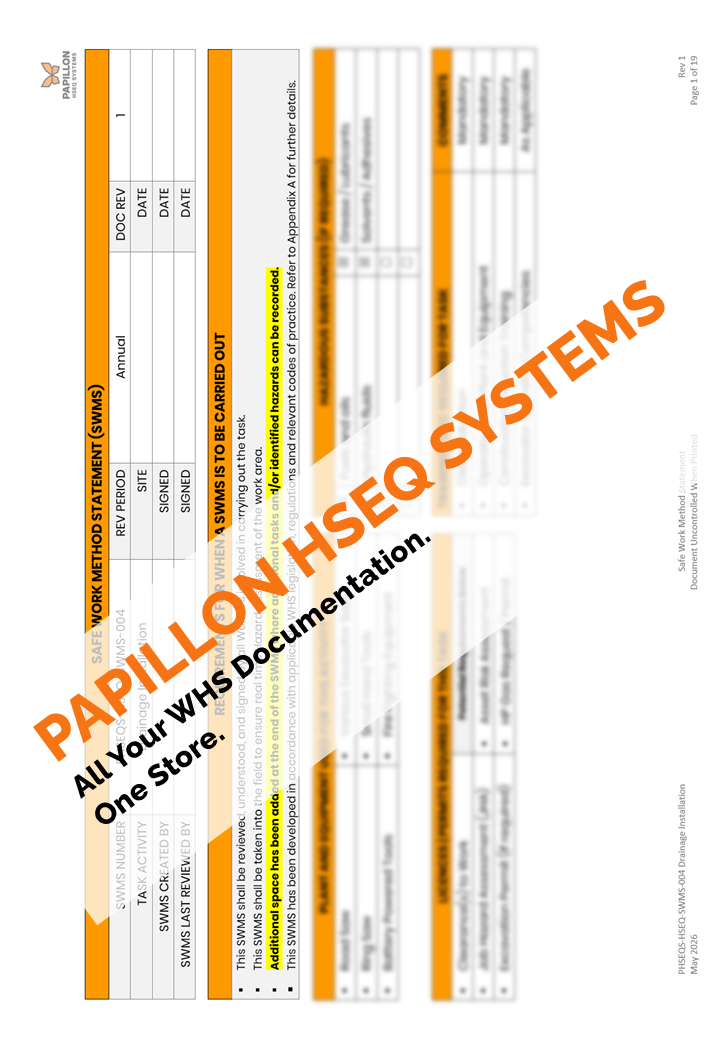
SWMS sections covering:
Job planning and pre-start requirements
Service locating and underground asset protection
Excavator prestart inspections
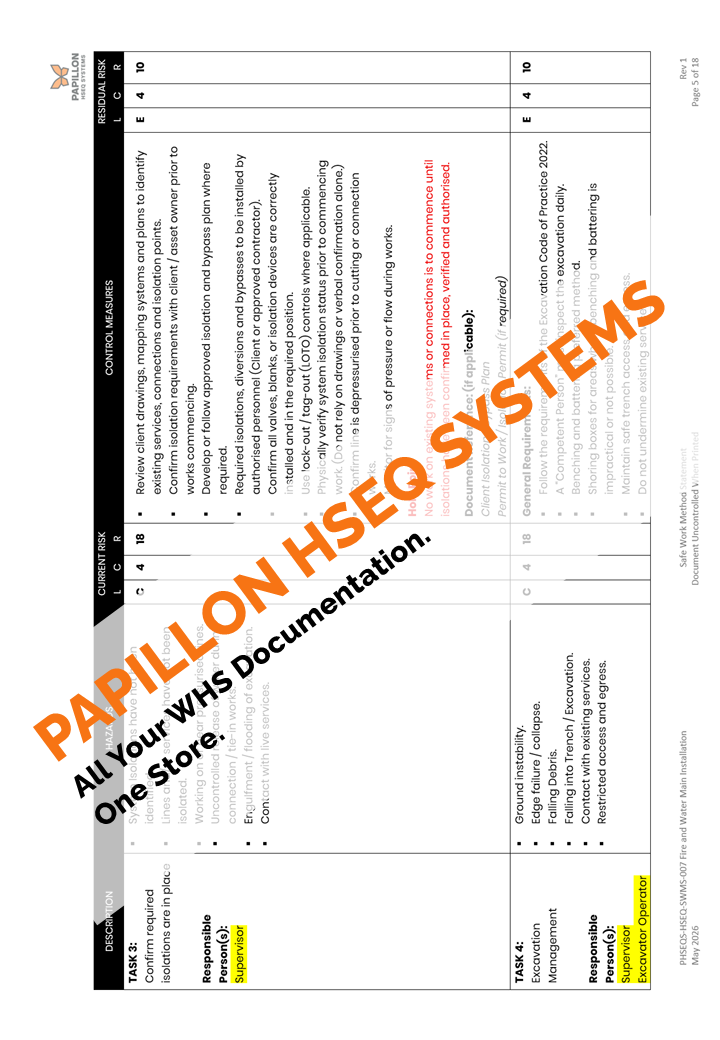
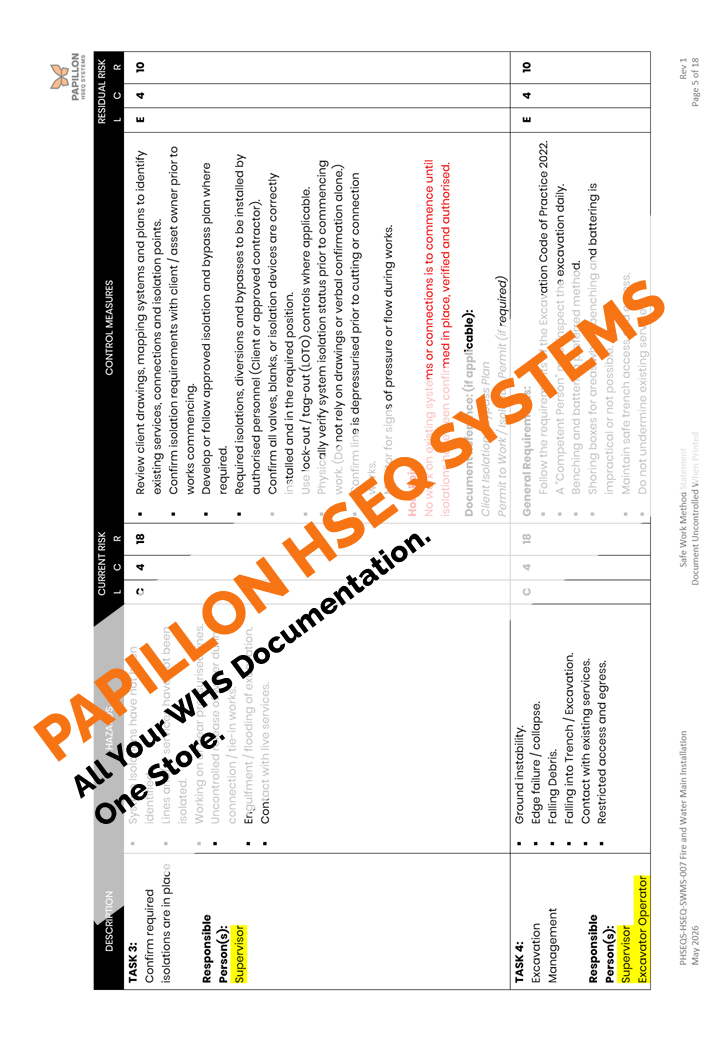
Excavation management controls
Human and machine interface controls
Excavator operation requirements
Lifting operations using excavators
Backfill, spoil handling and truck loading activities
Refuelling requirements
Attachment changeout and quick hitch operations
Environmental and public safety requirements
Site demobilisation requirements
Additional tasks and change management section
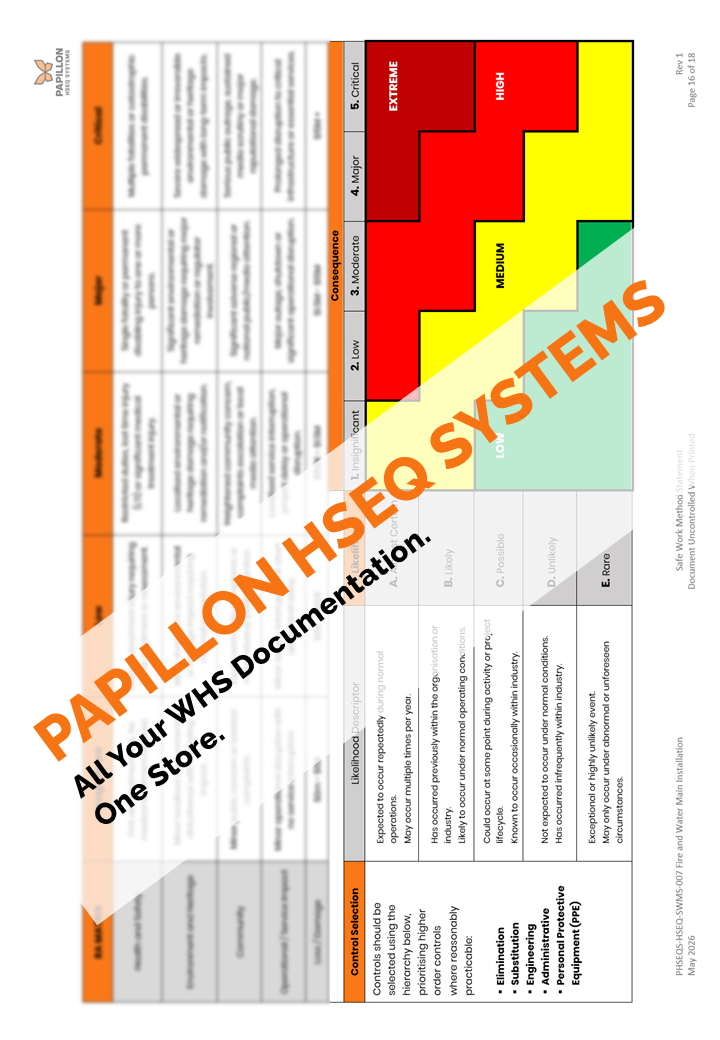
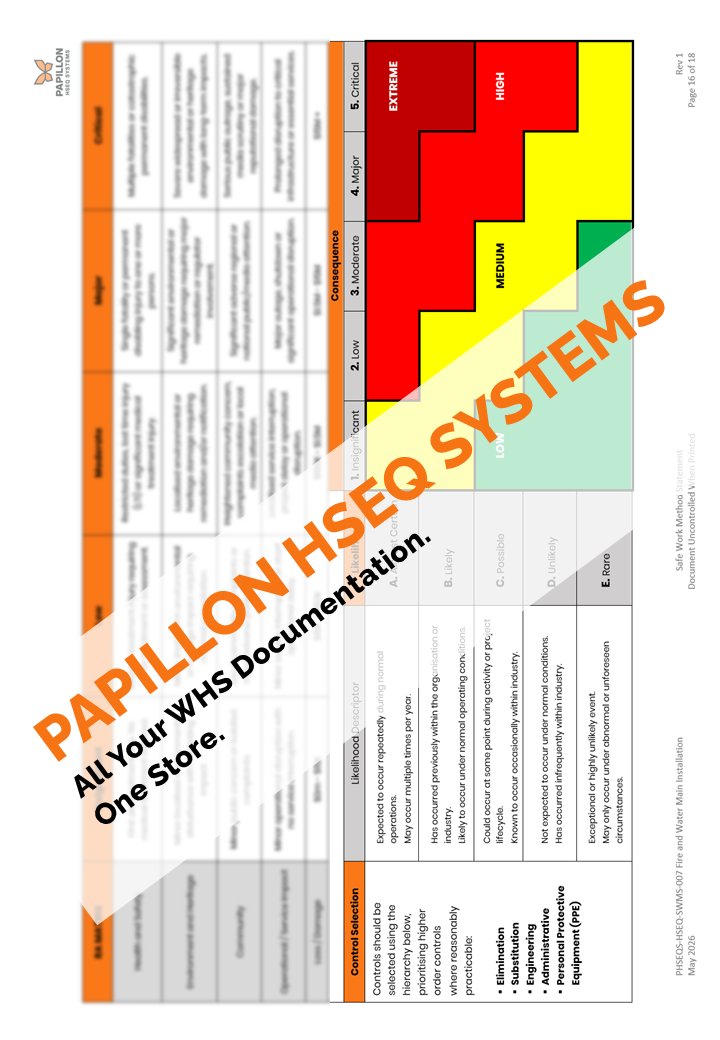
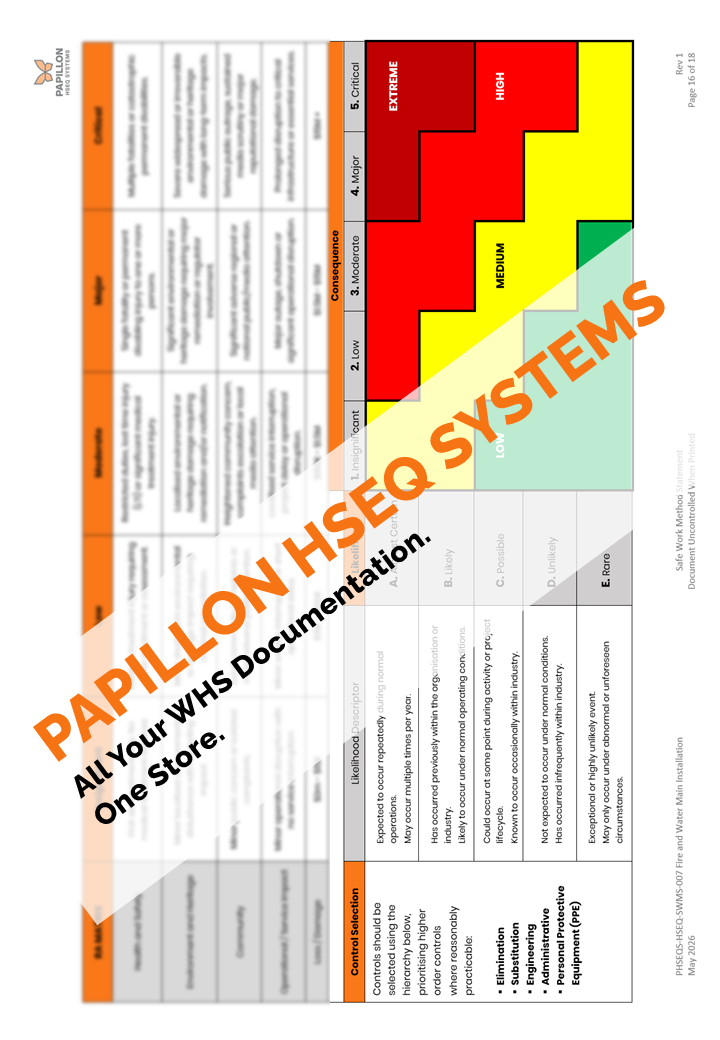
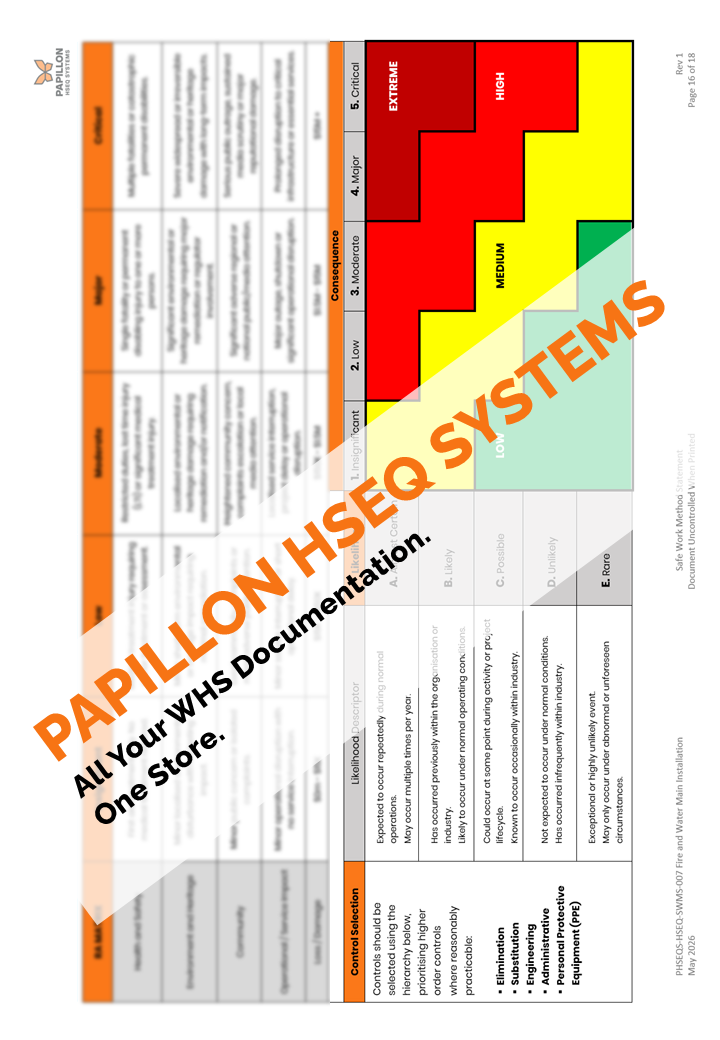
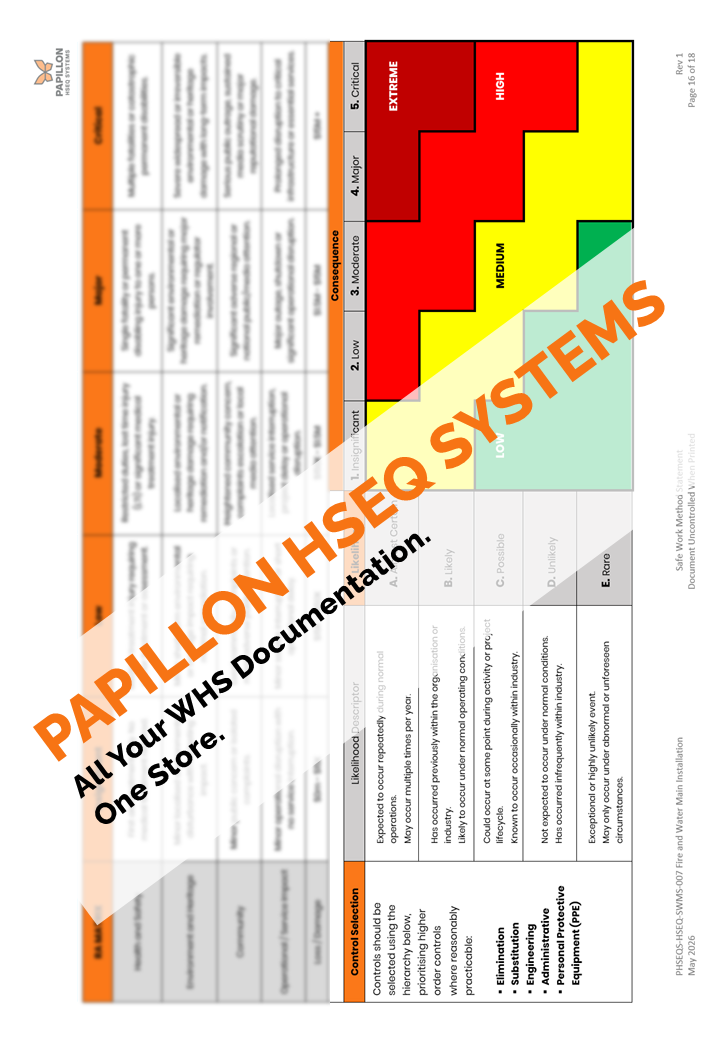
Risk Assessment Matrix
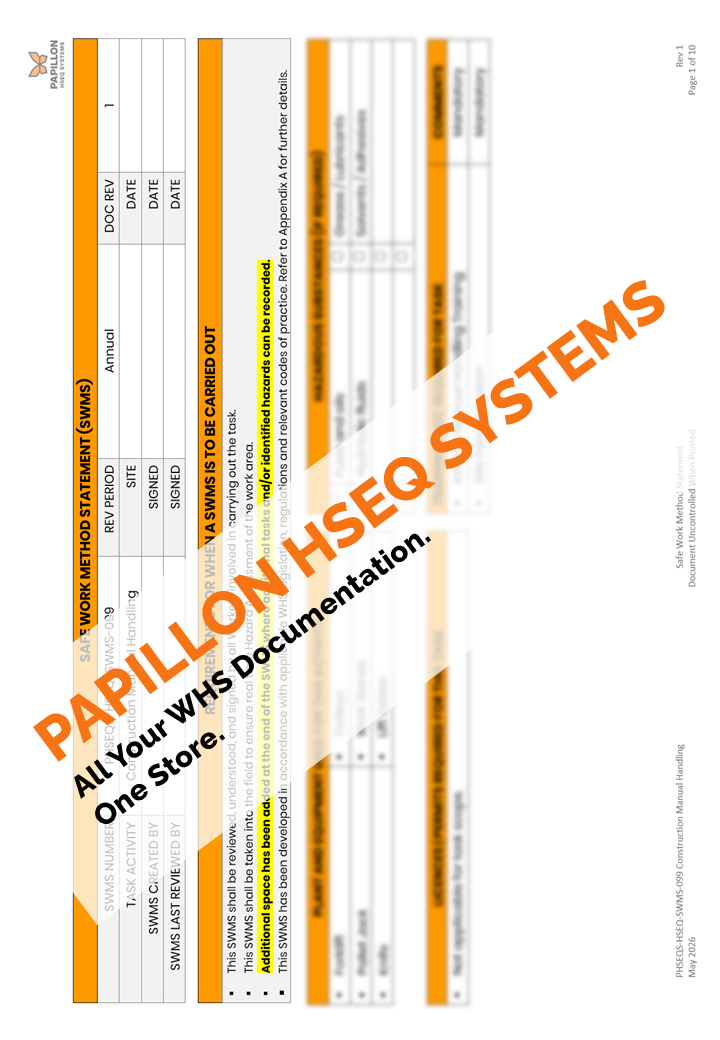
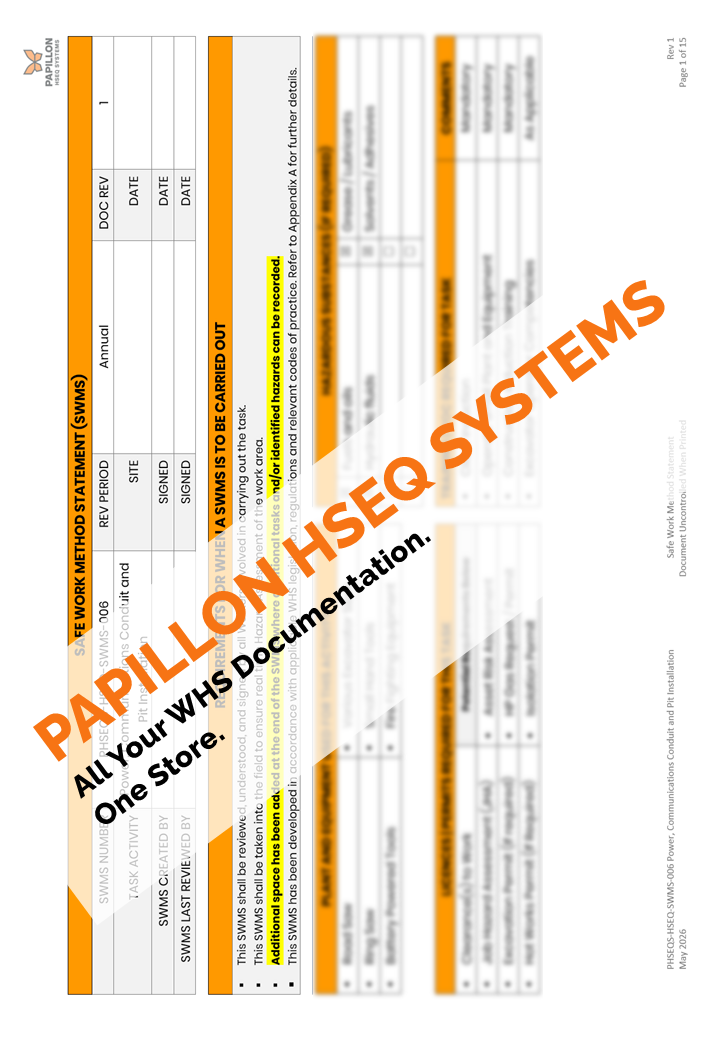
Worker sign-on section
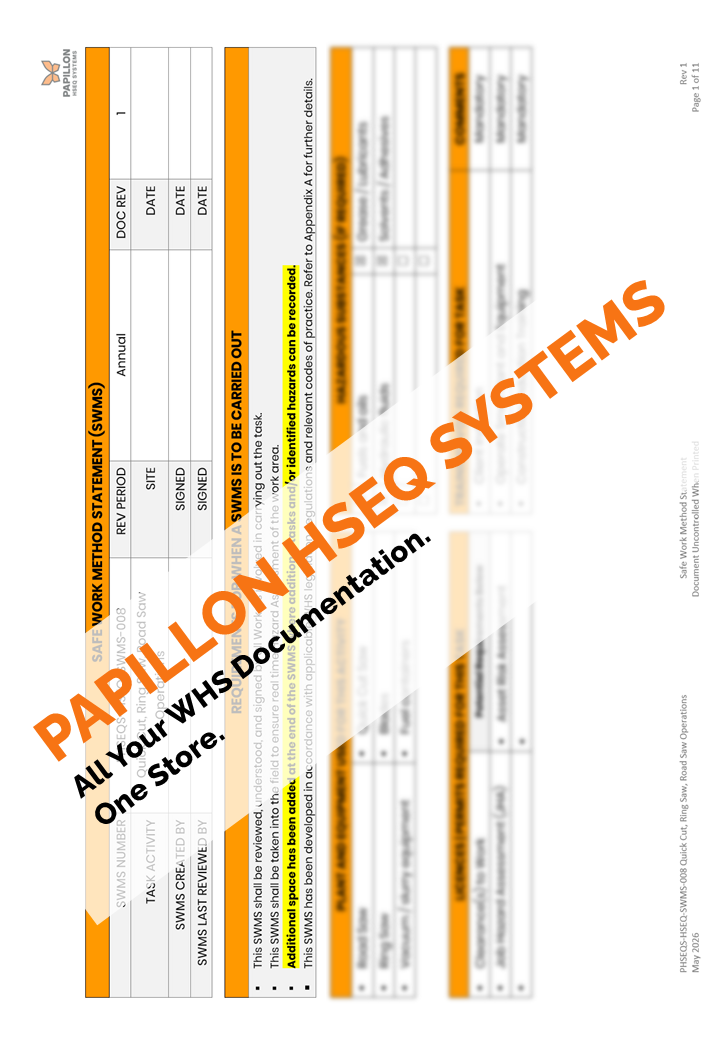
Includes:
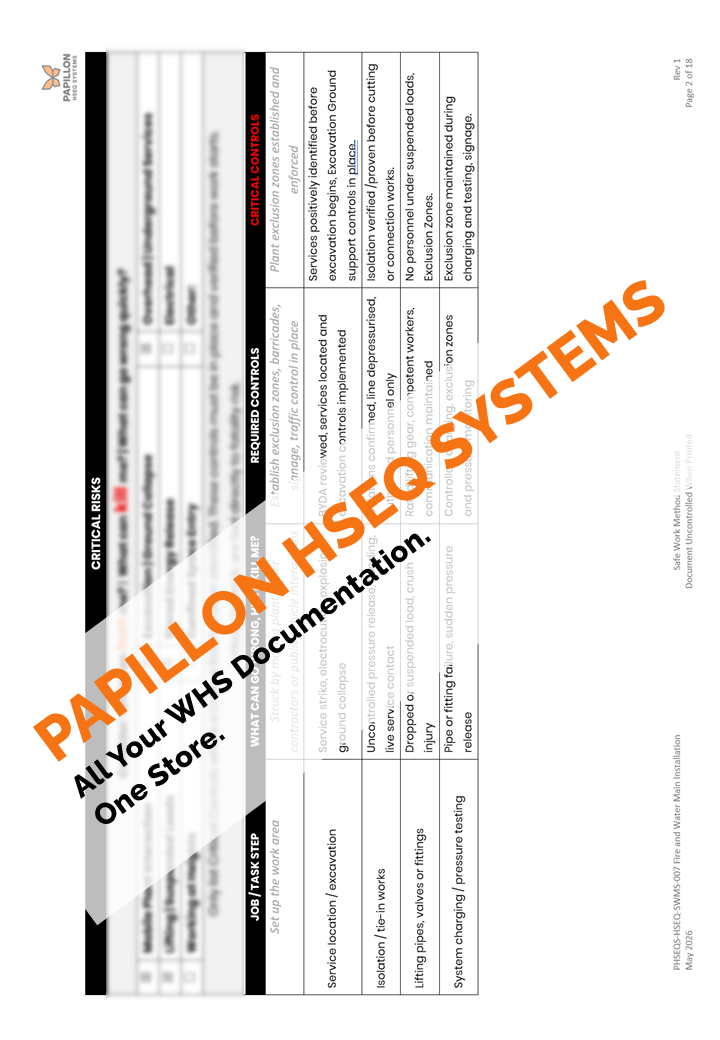
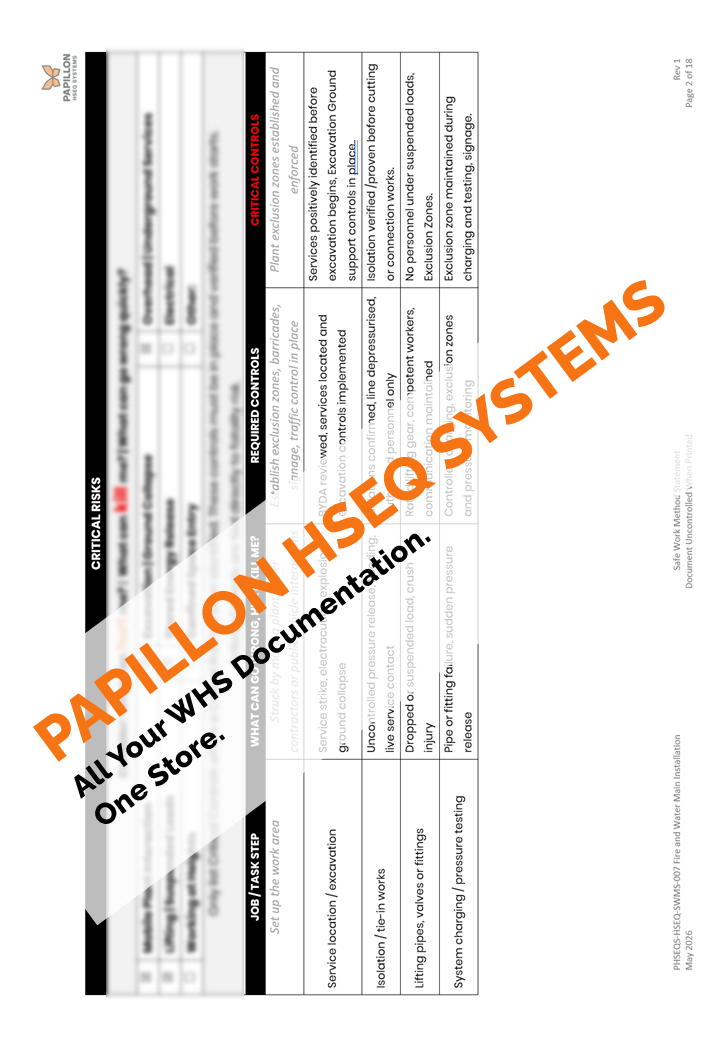
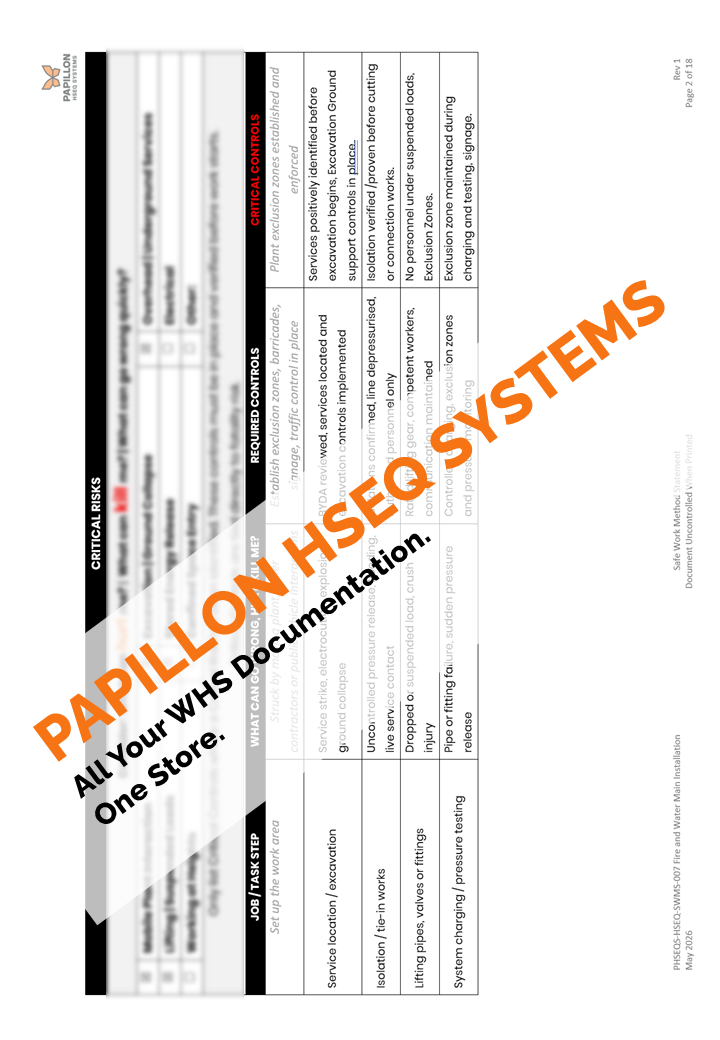
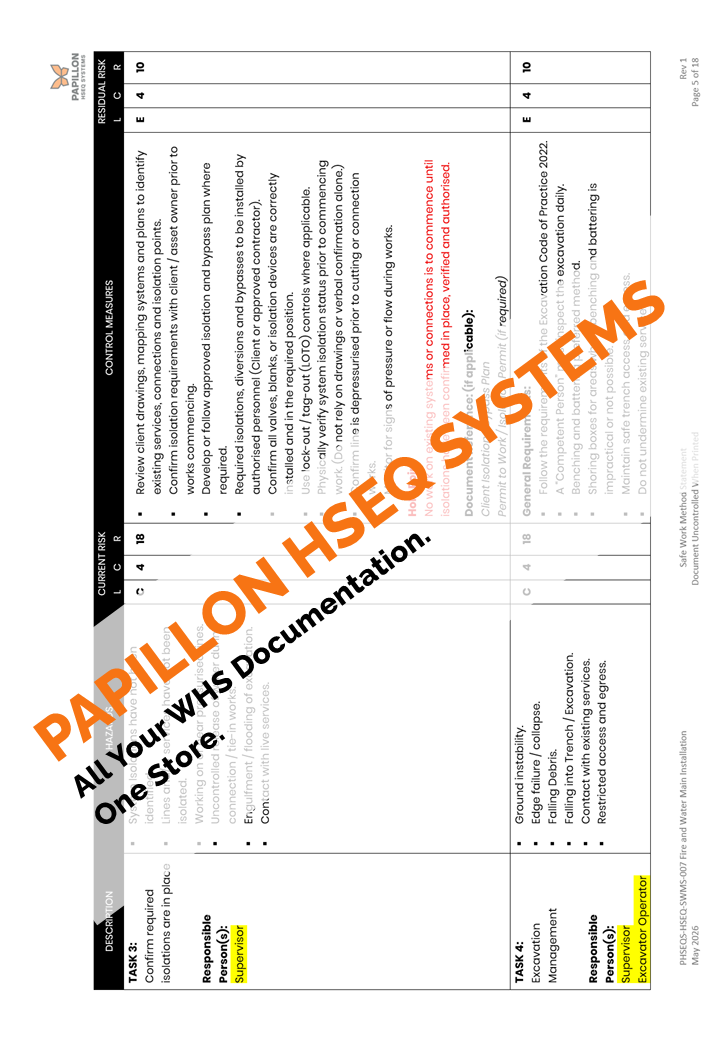
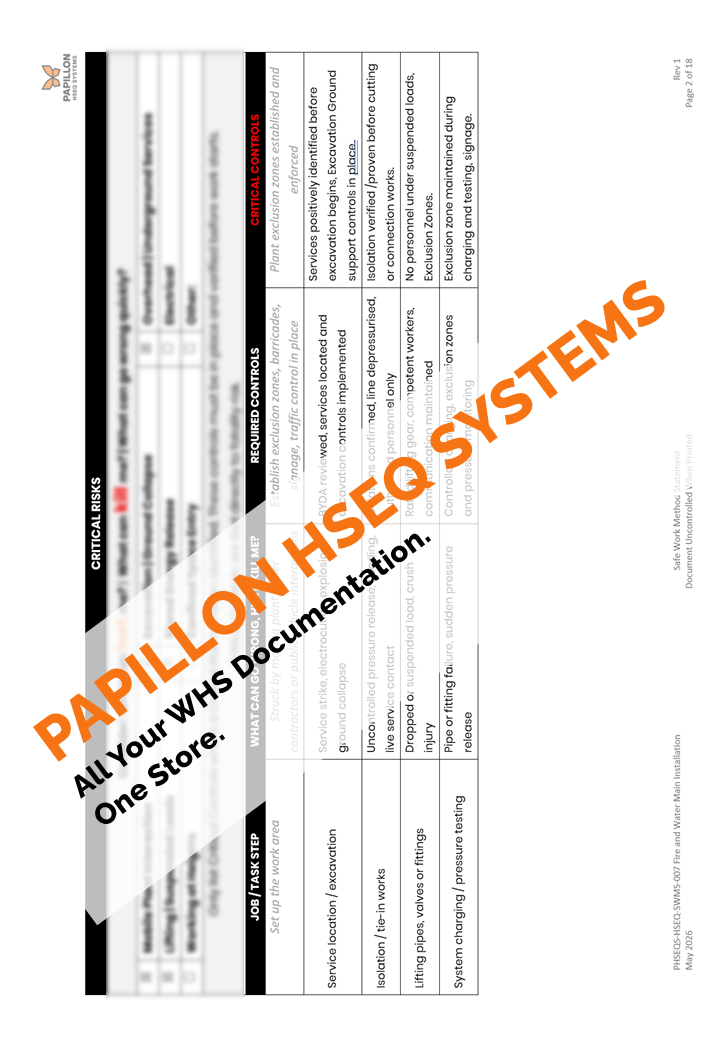
Critical Risks section
Critical Controls verification section
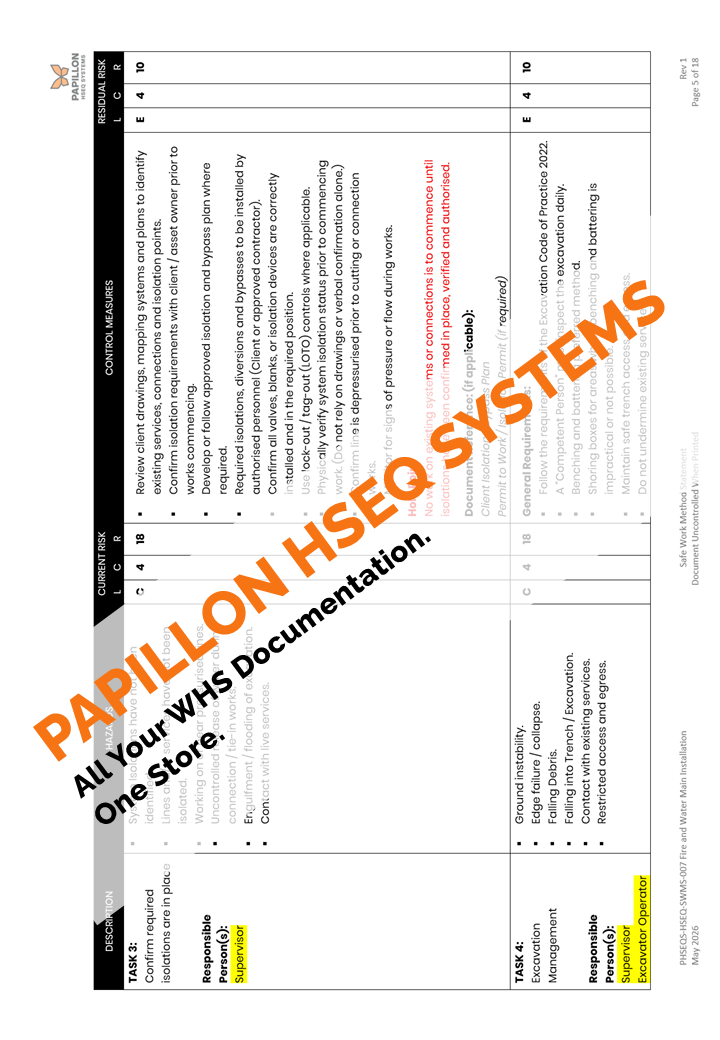
Hold Points for excavation and service location activities
Residual risk assessment tables
Additional hazard reassessment section
Company representative sign-off fields
Worker acknowledgement and sign-on pages
Civil construction projects
Bulk and detailed excavation works
Utility installation projects
Trenching and earthworks activities
Drainage and pipeline installation works
Road and infrastructure construction
Service location and excavation activities
Plant hire and excavation contractors
Principal contractor compliance
Client, tender and prequalification submissions
File: Microsoft Word (.docx)
Editable: Yes
Delivery: Instant digital download
Licence: Single-business use
This SWMS has been developed as a general framework for Excavator Operations and must be reviewed and customised to reflect specific project requirements, site conditions, equipment configurations and applicable legislation.
Where task scope, site conditions or work methods change, work activities must be reassessed and additional hazards, controls and approvals captured prior to continuing work.
Additional controls, permits, service locating requirements, lifting plans, traffic management requirements and asset owner requirements may apply depending on the scope and location of works.
This document has been developed using Western Australian (WA) legislation, regulations, codes of practice and industry guidance current at the time of development. While the operational controls and work activities are broadly applicable to similar works across Australia, businesses operating outside Western Australia must review and amend legislative references and jurisdictional requirements to ensure compliance with applicable local laws and regulatory obligations.
All documents should be reviewed and approved by a competent person prior to implementation.
This document should be used in conjunction with relevant excavation, service locating, lifting operations, traffic management, mobile plant and manual handling controls and procedures.
A professional, editable Safe Work Method Statement (SWMS) developed for Excavator Operations across civil construction, utilities, infrastructure and earthworks projects.
This SWMS is designed to support high-risk construction activities involving excavation works, service location, trenching, lifting operations, spoil handling, truck loading, attachment changeovers and mobile plant operation. It provides practical, field-focused controls aligned with real-world construction and utility environments while addressing critical risks associated with plant interaction, excavation collapse, service strikes, suspended loads and equipment operation.
Professional SWMS format aligned to civil construction and excavation works
Covers excavator operation and excavation management activities
Includes Critical Risk identification and Critical Controls framework
Includes service location and underground asset protection controls
Covers excavation collapse and ground stability risks
Includes lifting operations using excavators
Covers spoil handling, truck loading and Chain of Responsibility considerations
Includes attachment changeout and quick hitch controls
Includes Hold Points and quality verification requirements
Includes change management and additional task reassessment sections
Practical field-focused controls suitable for operational crews
Professional Papillon HSEQ Systems design
Fully editable Microsoft Word format
Editable Excavator Operation SWMS (.docx)
SWMS sections covering:
Job planning and pre-start requirements
Service locating and underground asset protection
Excavator prestart inspections
Excavation management controls
Human and machine interface controls
Excavator operation requirements
Lifting operations using excavators
Backfill, spoil handling and truck loading activities
Refuelling requirements
Attachment changeout and quick hitch operations
Environmental and public safety requirements
Site demobilisation requirements
Additional tasks and change management section
Risk Assessment Matrix
Worker sign-on section
Includes:
Critical Risks section
Critical Controls verification section
Hold Points for excavation and service location activities
Residual risk assessment tables
Additional hazard reassessment section
Company representative sign-off fields
Worker acknowledgement and sign-on pages
Civil construction projects
Bulk and detailed excavation works
Utility installation projects
Trenching and earthworks activities
Drainage and pipeline installation works
Road and infrastructure construction
Service location and excavation activities
Plant hire and excavation contractors
Principal contractor compliance
Client, tender and prequalification submissions
File: Microsoft Word (.docx)
Editable: Yes
Delivery: Instant digital download
Licence: Single-business use
This SWMS has been developed as a general framework for Excavator Operations and must be reviewed and customised to reflect specific project requirements, site conditions, equipment configurations and applicable legislation.
Where task scope, site conditions or work methods change, work activities must be reassessed and additional hazards, controls and approvals captured prior to continuing work.
Additional controls, permits, service locating requirements, lifting plans, traffic management requirements and asset owner requirements may apply depending on the scope and location of works.
This document has been developed using Western Australian (WA) legislation, regulations, codes of practice and industry guidance current at the time of development. While the operational controls and work activities are broadly applicable to similar works across Australia, businesses operating outside Western Australia must review and amend legislative references and jurisdictional requirements to ensure compliance with applicable local laws and regulatory obligations.
All documents should be reviewed and approved by a competent person prior to implementation.
This document should be used in conjunction with relevant excavation, service locating, lifting operations, traffic management, mobile plant and manual handling controls and procedures.