 Image 1 of 2
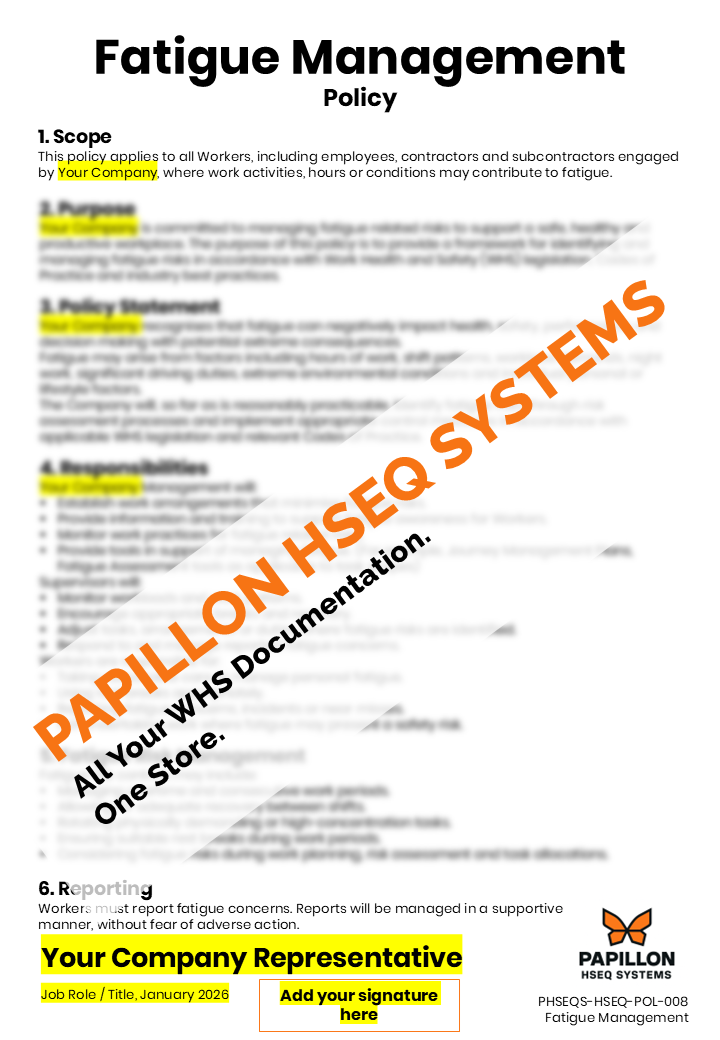 Image 2 of 2
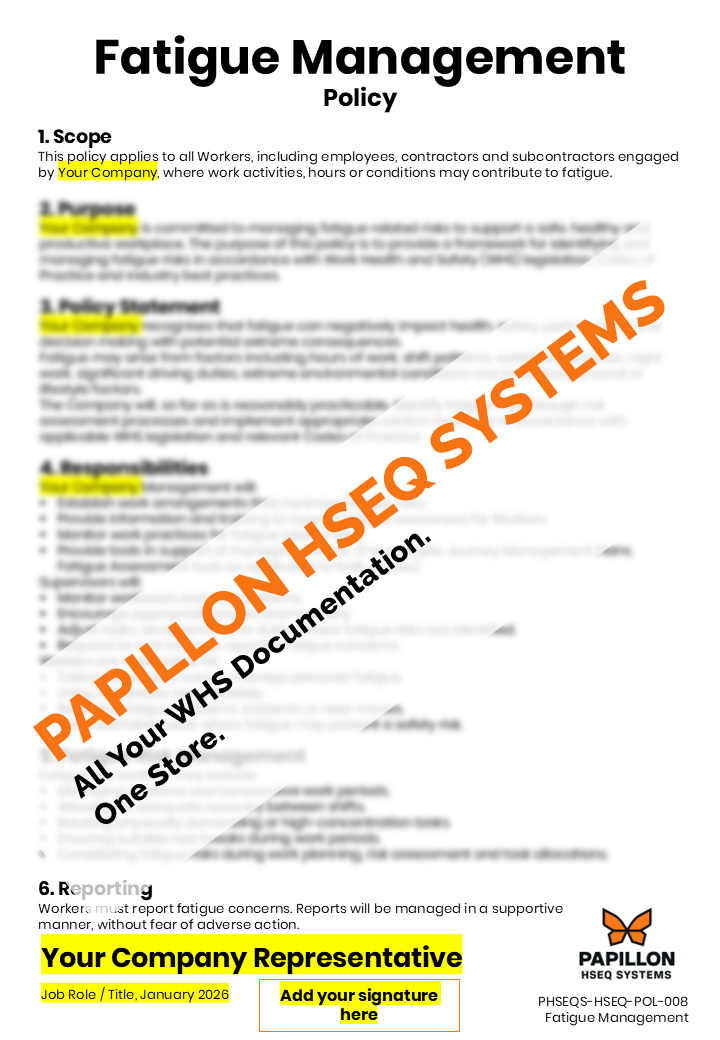
A professional, editable Fatigue Management Policy designed to identify fatigue-related risks and implement appropriate control measures to support safe, compliant and productive workplaces.
This policy establishes clear expectations for managing fatigue risks arising from work patterns, driving activities, environmental conditions and individual factors, and supports duty of care obligations under Work Health and Safety (WHS) legislation and relevant Codes of Practice.
Clear, structured Fatigue Management Policy format
WHS-aligned and Codes of Practice referenced
Focuses on fatigue risk identification, assessment and control
Addresses fatigue risks associated with work hours, driving and environmental conditions
Defines Management, Supervisor and Worker responsibilities
Requires reporting of fatigue concerns in support of duty of care
Supports behavioural safety and People & Behaviour governance frameworks
Representative sign-off section included
Professional Papillon HSEQ Systems design
Fully editable PowerPoint format
Editable Fatigue Management Policy (PPT)
Policy sections covering:
Scope and application
Purpose and policy intent
Fatigue risk identification and WHS alignment
Roles and responsibilities (Management, Supervisors, Workers)
Fatigue risk management controls
Reporting requirements
Company representative name, role, date and signature fields
Construction and civil worksites
Transport, driving and remote work activities
Operational and industrial workplaces
Contractor and labour hire management
Client and prequalification submissions
People & Behaviour governance frameworks
WHS and HSEQ management systems
File: PowerPoint (.pptx)
Editable: Yes
Delivery: Instant digital download
Licence: Single-business use
This document establishes policy-level expectations and must be supported by appropriate procedures, risk assessments and operational controls
All content must be reviewed and customised to reflect site conditions, work activities and applicable legislation
Licensed for use by a single business and may be customised internally
A professional, editable Fatigue Management Policy designed to identify fatigue-related risks and implement appropriate control measures to support safe, compliant and productive workplaces.
This policy establishes clear expectations for managing fatigue risks arising from work patterns, driving activities, environmental conditions and individual factors, and supports duty of care obligations under Work Health and Safety (WHS) legislation and relevant Codes of Practice.
Clear, structured Fatigue Management Policy format
WHS-aligned and Codes of Practice referenced
Focuses on fatigue risk identification, assessment and control
Addresses fatigue risks associated with work hours, driving and environmental conditions
Defines Management, Supervisor and Worker responsibilities
Requires reporting of fatigue concerns in support of duty of care
Supports behavioural safety and People & Behaviour governance frameworks
Representative sign-off section included
Professional Papillon HSEQ Systems design
Fully editable PowerPoint format
Editable Fatigue Management Policy (PPT)
Policy sections covering:
Scope and application
Purpose and policy intent
Fatigue risk identification and WHS alignment
Roles and responsibilities (Management, Supervisors, Workers)
Fatigue risk management controls
Reporting requirements
Company representative name, role, date and signature fields
Construction and civil worksites
Transport, driving and remote work activities
Operational and industrial workplaces
Contractor and labour hire management
Client and prequalification submissions
People & Behaviour governance frameworks
WHS and HSEQ management systems
File: PowerPoint (.pptx)
Editable: Yes
Delivery: Instant digital download
Licence: Single-business use
This document establishes policy-level expectations and must be supported by appropriate procedures, risk assessments and operational controls
All content must be reviewed and customised to reflect site conditions, work activities and applicable legislation
Licensed for use by a single business and may be customised internally