Why You Can’t Rely on AI Alone for Your HSEQ Systems
(And why responsibility and judgement still lies with the business)
AI is now capable of producing safety documentation in seconds.
Policies, SWMS, risk registers, frameworks which can be technically complete, formatted well enough, all sounding “about right”.
For new construction business owners (or even existing), that feels like a nice easy solution. However, in practice, relying on AI alone for HSEQ systems misunderstands two things:
How safety documentation is actually assessed by clients.
Where responsibility within the business really sits.
Responsibility in HSEQ Can’t Be Outsourced
This is the non-negotiable starting point.
You can outsource to AI:
Drafting.
Formatting (well you can try at this point, often the outputs do not play well with existing formatting, but expect this to get better very quickly).
Admin support. (which should include automating tasks where possible).
However, responsibility cannot sit with AI.
Under WHS legislation for your jurisdiction, the duty remains with:
The business and the officers of that business.
If documentation is weak, overly generic, or misaligned with the actual work:
“AI generated it” is not a defence I would recommend testing in a court.
“The system wrote it” does not transfer liability away in any sense.
At the end of the chain, a human is (and will be held) accountable should something go seriously sideways.
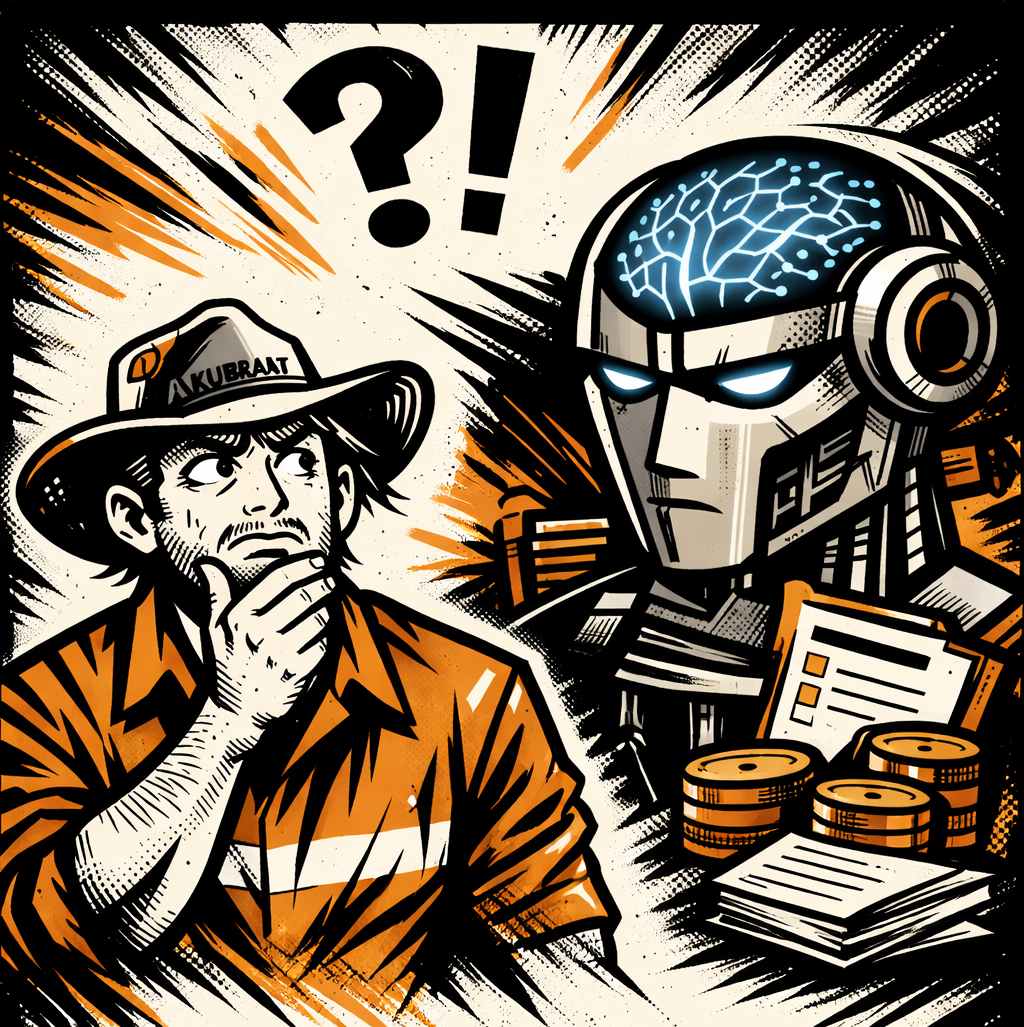
The Real Limitation of AI in Safety Documentation
AI doesn’t usually fail because it’s wrong.
It fails because it’s too generic.
AI generated safety documentation often:
Avoids local terminology and glosses over regional expectations.
Misses client-specific language.
Adds controls which are irrelevant or not practicable against the risk.
Purposely stays vague where specificity is expected for the work!
But, did you know this is not accidental?
AI is inherently designed to:
Be safe.
Be broadly applicable.
Avoid over-commitment.
Hedge where context is unclear.
And therein lies the issue. AI outputs are the opposite of what clients expect in construction safety documentation.
Clients Can Tell… And It Reflects Poorly
This part will continue to be underestimated.
Clients, principal contractors, and assessors:
Read hundreds of documents.
See the same AI phrasing repeatedly.
Recognise generic hazard/control pairings instantly.
It may not matter to some Clients but once you head towards providing services for your Local Government Authorities, Utilities and beyond (Tier 1s and 2s) it really does.
They may not explicitly say “this was written by AI” to you.
But they will likely think:
This wasn’t written for or this hasn’t been properly thought through for this specific job.
It’s regurgitated from a previous job (this is also an old industry issue).
This contractor hasn’t actually engaged with the details and therefore hasn’t demonstrated they have assessed the associated risks.
And of course, that perception matters.
Not just for that submission but for:
Actually winning future work with that Client.
Reputation.
Audit outcomes.
Any post incident scrutiny.
Generic documentation reflects generic effort
A Construction Risk Assessment Workshops (CRAW) Example:
(CRAWs) are a good example of where AI falls short without human oversight.
AI can generate:
A CRAW agenda.
A risk list.
A worksheet base template (again within reason, the formatting’s pretty sloppy still).
What it can’t judge is:
How deep the discussion needs to go for this client.
How formal the record needs to be for this project, as in, the level of detail.
Who is expected to attend.
What level of evidence will be expected later.
What would look inadequate if reviewed after an incident.
How the template should be formatted for an effective workshop session.
What the prework for the CRAW session should be. (More on this in another article).
Those expectations are not written in legislation.
They are shaped by:
Client Culture.
Project Complexity.
Prior incidents.
Industry maturity.
Regulator focus at that time.
An experienced HSEQ practitioner feels when a CRAW is too light, or conversely unnecessarily heavy.
AI doesn’t.
Over-Verbose (as in lots of rows on the worksheet) does not equal Fit for Purpose.
If anything, if you present a CRAW document that is way too detailed against a small job you will waste your time and worse, the clients time.
AI has tendencies to:
Over explain.
Add unnecessary controls.
Bloats documents to appear thorough.
Avoid making specific calls because it cannot…
In reality, effective safety documentation is:
Clear and concise.
Specific and job aligned.
Defensible later, as in: We do what we say or how it’s actually written down.
Clients don’t want a 40-page SWMS that no one reads with generic control lists. (I.E some AI slop soup)
They want:
Evidence you understand their job.
Documentation that reflects how work will actually be done.
Clarity, not volume.
Proof they can rely on later if needed that they engaged a competent contractor which actual systems and processes for managing WHS.
The Standard Has Changed, And That’s the Point
Here’s the critical shift.
AI has not reduced the bar for safety documentation. It has raised it.
Read that again.
Why?
Drafting is now multiples faster.
The basic structure is no longer the bottleneck and “starting from scratch” is no longer an excuse for any business.
Which means…
If you’re not spending the time customising your safety documentation properly for each project, you will lose work.
Why?
Because your documentation will now look just like everyone else who doesn’t customise it.
Generic Inputs -> Generic Outputs from AI = Generic Results for the Client = Generic (or negative) Results for your Business.
Gone are the old days of:
Recycling the same document.
Changing the Client name and logo (hopefully you got them all... don’t forget those pesky footers…)
Doing a quick find and replace.
Clients expect (and rightly so):
Project-specific thinking.
Tailored risk treatment language that matches their environment.
Yes, that creates admin burden.
With AI, that burden has collapsed. The actual admin specific component is lower than it has ever been if it’s used correctly and even more so when completed by an experienced HSEQ Practitioner.
Where AI Fits (Used Properly)
AI is extremely effective when:
Human judgement sets the scope.
The scope is clearly defined.
Expectations are understood first.
Risk is calibrated properly.
AI is then applied to accelerate customisation of your Tender Documents, Project Management Plans, not replace it.
Think Pareto’s principle an instant 80% draft to give you a massive head start.
Used this way, AI:
Speeds up all drafting.
Reduces admin resources.
Improves consistency across documents across time.
Assists with identifying errors or conflicts within documentation. It’s actually getting much better at this.
Frees up time for actual thinking and planning!
However, AI used incorrectly, it will:
Create false confidence.
Produce vague generic outputs.
Expose the business later at the worst possible time.
Why Fractional HSEQ Matters
This is why you can’t truly outsource HSEQ documentation to AI, but you can fractionalise it. (I’m going to expand on this concept in the next article.)
Fractional HSEQ delivery works because:
Judgement stays human.
Responsibility is understood and again is human.
AI is used as a technological tool, not a decision maker.
Documentation is calibrated and refined to match real client expectations.
Especially for new construction businesses, Fractional HSEQ support can help bridge the gap between:
Doing everything yourself.
Employing a full-time HSEQ advisor or Manager.
Final Thought
AI doesn’t remove responsibility.
The businesses that will win work going forward are not the ones using AI to do less (and cut costs), they’re the ones using it to do better, more specific, more defensible work, providing value and protection to the Client.
In HSEQ, that still requires human judgement.
And it likely always will.
If you’re unsure whether your HSEQ documentation would stand up to client scrutiny or post-incident review, that’s where experienced oversight matters.
Papillon provides fractional HSEQ support to construction businesses that need capability without the overhead of a full-time manager.
If you’d like to discuss how that could work for your business, get in touch.
